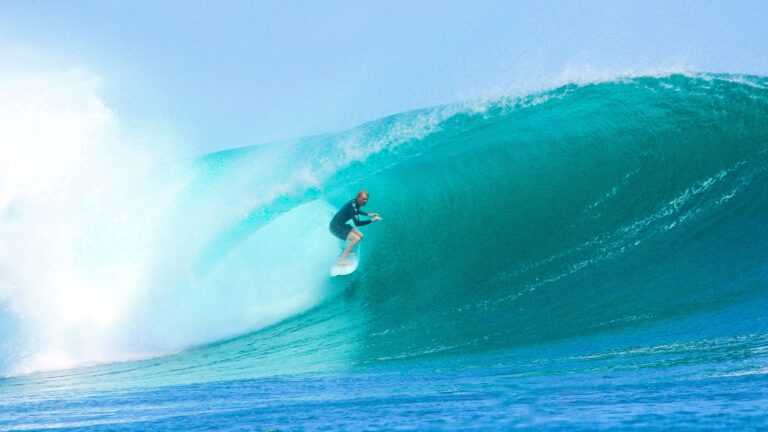
Krui is what Bali was before the villas. A sleepy town on the southwest coast of Sumatra, a long stretch of reef out front and a handful of surf camps strung along the road. No traffic, no beach clubs, just waves.
Getting here takes effort, and the waves are serious. That’s exactly why the surfers who come keep coming back. Here’s what you need to know before you go.
Header photo: @krui_surffilmer
In This Guide
The Short Version
- Who it’s for: confident intermediate surfers and up. Krui isn’t for beginners, or even lower-level intermediates.
- The waves: shallow reefs, lefts and rights. Ujung Bocur, Krui Left, Krui Right, Krui Bowl and The Peak are the most common.
- When to go: April to October for the most consistent swell.
- Getting there: fly into Bandar Lampung, then drive six to seven hours.
- The vibe: small, quiet and local. Bring cash, pack modest clothes for town and slow right down.
Is Krui Right for You?
Let’s be honest: Krui is not a place to learn. Almost every wave here breaks over shallow reef, and even the friendlier spots can get heavy when the swell picks up. If you’re still working on your take-offs or you’re not comfortable duck-diving a set, start somewhere else first. Our beginner-friendly spots in Bali are a much better bet.
If you can handle a reef break, read a lineup and paddle back out after a beating, Krui is a dream. Consistent swell, uncrowded mornings and a coastline with plenty still to explore.
The Waves
These are the most common waves, and the friendlier ones by Krui standards. Friendlier doesn’t mean easy. Always check the tide, watch a few sets and ask the locals before paddling out.
Ujung Bocur
Also known as Karang Nyimbor or The Point. A long left that peels along the reef at Tanjung Setia, about 30 kilometres south of Krui town, where most of the surf camps are. It’s the most consistent wave in the area and on a good day you’ll get long, rippable rides. It works on most tides but gets shallower and hollower at low tide. Watch out for sea urchins.
Krui Left
Right in town and often compared to a slightly softer version of Bingin in Bali. A fun, playful left over reef that works best around low tide. It’s the most popular wave in Krui, so expect company.
Krui Right
Next to Krui Left, breaking over reef and sand. Usually a little quieter than the left. A river opens up near the lineup, so give it a miss after heavy rain when the water gets dirty.
Krui Bowl
A punchy left that likes a higher tide. It can be fun and fast, but it’s shallow and has a habit of closing out, so pick your waves carefully. Reef boots aren’t a bad idea.
The Peak
A short, intense A-frame that throws a quick barrel, mostly running right. It’s over almost as soon as it starts, but what a few seconds. Expect a crowd when it’s on, and respect the locals.
Further Afield
Krui sits in the middle of a long coastline with plenty more waves north and south, many of them heavier and best left to advanced surfers. We’ll cover them one by one in future guides.
| Wave | Direction | Best tide | Notes |
|---|---|---|---|
| Ujung Bocur | Left | Most tides | Most consistent; hollower at low |
| Krui Left | Left | Low to mid | Popular, can get busy |
| Krui Right | Right | Mid | Avoid after heavy rain |
| Krui Bowl | Left | High | Shallow, closes out |
| The Peak | A-frame (mostly right) | Mid | Short, heavy barrel |
When to Go
April to October is the main season, with the biggest and most consistent swells from the Indian Ocean. Krui still gets surf from November to March, just smaller, with fewer surfers and quieter camps. For the bigger picture across Indonesia, see our guide to when to surf Indonesia.
Getting There
Krui isn’t the easiest place to reach, but that’s part of its charm.
- Fly to Bandar Lampung. Most surfers fly in from Jakarta, a short hop.
- Drive six to seven hours along the coast to Krui. Most surf camps can arrange a pick-up. Leave early and bring snacks.
- Small flights into Krui exist, but the planes are tiny and baggage is very limited. Boards are often a problem, so check before you book.
Bringing boards? Read flying with surfboards in Indonesia first, and see our packing list for remote Indonesia.
Where to Stay
Most surf camps sit around Tanjung Setia, right in front of Ujung Bocur. Others are closer to Krui town and its cluster of waves. You’ll find everything from simple local homestays to comfortable surf camps with meals and boat or scooter trips to the breaks. Many are family-run, and staying with them keeps your money in the community.
See the surf camps around Krui on our Krui page. We’re still getting to know many of them in person, so ask around before you book.
Life in Krui
- It’s a Muslim town. Cover up when you leave the beach, especially around mosques and during Friday prayers.
- Bring cash. There are ATMs in Krui town, but not around the camps, and cards aren’t widely accepted.
- Signal is patchy outside town. Grab a local SIM in Bandar Lampung.
- Eat local. Grilled fish, fresh coconuts and simple warungs. Ask your camp where they eat.
- Respect the lineup. Local surfers are friendly, and they deserve the same respect. Read our surf etiquette guide before you go.
FAQs
Is Krui good for beginners?
No. Krui is almost all reef, and even the friendlier waves break over shallow coral. It suits confident intermediate surfers and up. If you are still learning, Bali, Lombok or West Java are much better places to start.
How do I get to Krui?
Fly into Bandar Lampung, then drive about six to seven hours to Krui. Most surf camps can arrange a pick-up. There are small flights into Krui itself, but they carry very little luggage and boards are often a problem.
When is the best time to surf Krui?
April to October brings the biggest, most consistent swells. Krui still gets waves outside those months, just smaller, with fewer people around.
What is the best wave in Krui?
Ujung Bocur, a long left at Tanjung Setia about 30 kilometres south of Krui town, is the most consistent wave in the area. Around town, Krui Left, Krui Right, Krui Bowl and The Peak are the go-to spots.