Sumba feels like Indonesia before the crowds. Rolling savannah, wild horses, villages with tall peaked roofs and a coastline full of reef that most surfers never see.
It’s raw, it’s remote and it asks a lot of you. That’s exactly the appeal. Here’s what we’ve learned surfing West Sumba.
Header photo: Damea Dorsey
In This Guide
The Short Version
- Who it’s for: intermediate surfers and up. Most waves are powerful reef breaks.
- Where: West Sumba has most of the surf and is the easiest to reach.
- Occy’s Left: Sumba’s famous wave is private. Only NIHI Sumba guests can surf it.
- When: April to October for the most consistent swell.
- Getting there: fly from Bali to Tambolaka, about an hour.
- Beyond the surf: Marapu villages and the Pasola festival. Go slow, ask first and travel with a local guide.
Is Sumba for You?
If you’re a confident intermediate surfer or better, Sumba is a treat. The waves are mostly reef, often powerful and rarely crowded. If you’re still learning, you’ll find it hard going. Start in Bali or Lombok first, and come back when you’re ready.
Sumba also suits a certain kind of traveller. There are no beach clubs, roads can be rough and the nights are quiet. If that sounds like heaven, you’ll love it.
The Waves
We’re keeping this one a little vague on purpose. Sumba’s waves are part of what makes it special, and many of them sit in front of small villages. The best way to find them is with a local guide, or by asking at the place you stay.
West Sumba
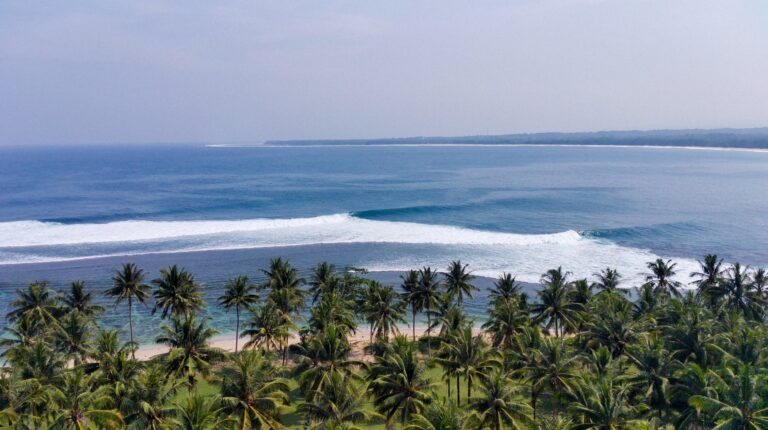
Most of the surf is on the west and southwest coast, a long stretch of reefs, points and bays facing the Indian Ocean. Expect powerful lefts and rights, empty lineups and long drives on bumpy roads between them. Some spots work on smaller swells, others need it big. A local guide makes all the difference.
Occy’s Left: A Private Wave
Sumba’s most famous wave is Occy’s Left, also known as God’s Left or Nihiwatu. It’s a long, powerful left breaking in front of NIHI Sumba, the luxury resort. Here’s the important part: it’s a private wave. Only NIHI guests can surf it, and the resort limits how many surfers go out each day.
So unless you’re staying at NIHI, don’t plan a trip around it, and don’t try to paddle out. There are plenty of other waves along the coast.
When to Go
April to October brings the most consistent swells and the dry-season trade winds. Outside those months, it gets wetter and the surf is less reliable, but you’ll have even fewer people around. Pasola season, in February and March, is a special time to visit for the culture, even if the surf is quieter. More in our guide to when to surf Indonesia.
Getting There
- Fly from Bali to Tambolaka in West Sumba. It’s about an hour, with a few flights a day.
- Arrange a driver or pick-up before you land. There’s very little public transport, and the roads to the coast can be slow.
- Bring boards? Check which plane you’re on. Some flights to Sumba use jets, others small propeller planes with strict board limits. Read flying with surfboards in Indonesia first.
Sumba Beyond the Surf
Marapu Culture and Villages
Many Sumbanese still follow Marapu, the island’s traditional belief system centred on the ancestors. You’ll see it in the villages, with their tall thatched roofs and stone tombs, some of them huge megaliths.
Villages are people’s homes, not museums. Go with a local guide, ask before taking photos, dress modestly and bring a small gift like betel nut (sirih pinang) or a donation for the village. Follow the lead of your guide, and you’ll be welcomed warmly.
The Pasola Festival
Pasola is one of the most remarkable traditions in Indonesia: a ritual battle on horseback, with riders throwing blunt wooden spears at each other. It’s held in parts of West and Southwest Sumba, including Kodi, Lamboya, Wanokaka and Gaura, usually in February and March.
The exact dates aren’t fixed. Marapu priests set them each year by watching the moon and the arrival of the nyale, colourful sea worms that wash ashore once a year. Ask locally for dates, keep a respectful distance from the field and follow the crowd and your guide.
Staying Safe
- Remote means remote. Medical help is limited, so pack a good first aid kit, deal with reef cuts straight away and have travel insurance that covers evacuation.
- Talk to a travel doctor before you go, including about malaria, which is still a risk in parts of Sumba.
- Roads can be rough. Driving at night isn’t a great idea. Hire a local driver who knows the roads.
- Bring cash. ATMs are mostly in the towns, and cards aren’t widely accepted.
- Travel with a local guide when visiting villages or looking for waves. It’s safer, more respectful and you’ll see far more.
Where to Stay
Sumba has everything from simple guesthouses and Sumbanese-run homestays to surf camps and high-end resorts. If you can, stay somewhere owned or run by local families, and hire local guides and drivers. It keeps your money on the island and gives you a much better trip.
See places to stay on our Sumba page. We’re still getting to know many of them in person, so ask around before you book.
FAQs
Can anyone surf Occy’s Left in Sumba?
No. Occy’s Left, also known as God’s Left or Nihiwatu, is a private wave. Only guests of NIHI Sumba can surf it, and the resort limits how many surfers go out each day. If you’re not staying there, enjoy the other waves along the coast.
Is Sumba good for beginners?
Not really. Most of Sumba’s waves are powerful reef breaks, best for intermediate surfers and up. Some resorts have gentler spots for lessons, but Sumba isn’t a place to learn on your own.
How do I get to Sumba?
Fly from Bali to Tambolaka in West Sumba. The flight takes about an hour. From there, arrange a driver or a pick-up from where you’re staying, as there is very little public transport.
When is Pasola in Sumba?
Pasola usually takes place in February and March in West and Southwest Sumba, in areas like Kodi, Lamboya, Wanokaka and Gaura. The exact dates are set each year by the Marapu priests, based on the moon and the arrival of the nyale sea worms.