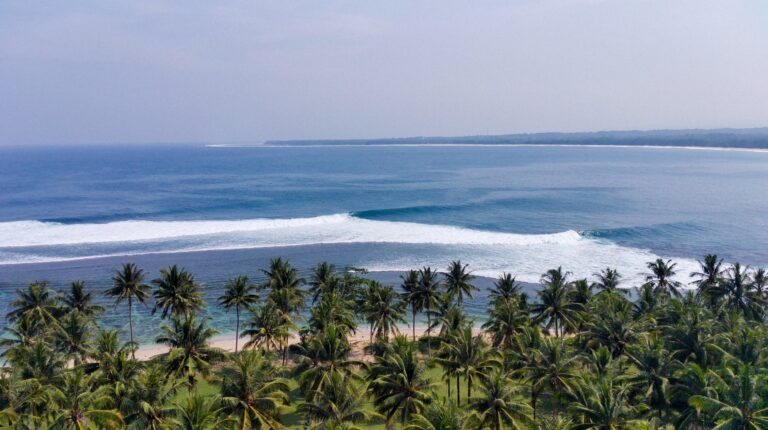
Jungle behind you, a mile of reef in front of you and a left that just keeps going. G-Land is one of the most famous waves on the planet, and one of the wildest places to surf it.
We’ve surfed it ourselves, so here’s the honest version: what it’s like, who it’s for, and why the national park around it matters as much as the waves.
Header photo: Bobby’s G-Land
In This Guide
The Short Version
- Who it’s for: advanced surfers only. The main reef is fast, shallow and heavy.
- The waves: a long left broken into sections: Kongs, Money Trees, Launching Pads and Speedies. Friendlier waves like 20/20 and Tiger Tracks are further along the bay.
- Where: Plengkung, inside Alas Purwo National Park on the southeast tip of Java.
- When: April to October, with the biggest swells from June to August.
- Getting there: by speedboat with your camp, or by road through Banyuwangi, which is cheaper.
Is G-Land for You?
Short answer: only if you’re an advanced surfer. G-Land breaks over shallow reef at speed, and the barrels are serious. On a big day it’s one of the heaviest lefts in Indonesia. If you’re not comfortable pulling into hollow waves over coral, enjoy it from the beach.
Not quite there yet? There are friendlier waves further down the bay, but if you’re still learning, Bali or Lombok are much better places to start. See our beginner-friendly spots in Bali.
The Waves
G-Land is one long left-hand reef, split into named sections from the top of the point down. On the right day, they link up into a ride you’ll talk about for years.
Kongs
The first section at the top of the reef. It picks up the most swell and is the most forgiving of the main sections, with long, open walls. A good place to warm up and find your rhythm.
Money Trees
The heart of G-Land and the section on every poster. Long, fast and barrelling, it gets hollower as the tide drops and the swell builds. Expect a crowd when it’s on.
Launching Pads
A steep, hollow take-off further down the reef that can break well out to sea on bigger swells. It throws you straight into the next section, so commit or get out of the way.
Speedies
The last and most critical section. Very fast, very shallow and very hollow, it actually comes alive on the bigger swells that close out the sections above. Experts only.
20/20 and Tiger Tracks
Further along the bay, away from the main reef, these are the friendlier options for smaller days or when G-Land is too big. They’re often busy with surf schools, so expect lessons in the water and be patient in the lineup. Friendlier still means reef, so reef boots are a good idea.
| Wave | Direction | Level | Notes |
|---|---|---|---|
| Kongs | Left | Advanced | Picks up the most swell, most forgiving |
| Money Trees | Left | Advanced | The classic, hollower at low tide |
| Launching Pads | Left | Advanced | Steep take-off, can break far out |
| Speedies | Left | Expert | Fast and shallow, best on big swells |
| 20/20 | Mostly left | Intermediate and up | Smaller days, busy with surf schools |
| Tiger Tracks | Left and right | Intermediate and up | Softer option, busy with surf schools |
Alas Purwo National Park
G-Land isn’t just a surf spot. It sits inside Alas Purwo National Park, one of the oldest and wildest forests in Java. Its name means “ancient forest”, from a Javanese legend that says this is where the land first rose from the sea.
The park covers more than 430 square kilometres of jungle, mangroves, savannah and beaches. It’s home to wild banteng, the Javan cattle, along with dholes, deer, monkeys, peafowl and, very rarely seen, leopards. Turtles nest on its beaches, and Pura Luhur Giri Salaka, an old Hindu temple inside the park, still draws pilgrims for ceremonies.
How to Be a Good Guest
- Pay the park fee. It helps protect the forest. Most camps include it or collect it for you.
- Leave nothing behind. Take your rubbish, including plastic bottles and wax wrappers, back out with you.
- Don’t feed the monkeys and keep your food locked away. They’re clever and bold.
- Give wildlife space. If you see banteng or deer, watch from a distance.
- Respect the temple and anyone praying. Cover up and keep your voice down if you visit.
- Mind the reef. Don’t stand on coral, and wear reef boots at low tide.
Beyond the Waves
On a flat day, the park is worth exploring. The Sadengan savannah has a watchtower where you can see banteng and deer grazing, especially late in the afternoon. Ngagelan Beach is known for turtle conservation, and there are jungle walks to caves and quiet beaches. Ask your camp or the park rangers before heading out on your own.
When to Go
April to October is G-Land season, when Indian Ocean swells meet the dry-season trade winds blowing offshore. June to August brings the biggest, most consistent swells and the most surfers. Outside the season, the camps quieten down or close. For the bigger picture, read our guide to when to surf Indonesia.
Getting There
By Speedboat
The easiest way in. Most surf camps arrange a transfer from Bali, usually by road to the coast and then a speedboat across Grajagan Bay to the camps. It’s quick and fun, but it’s usually the more expensive option.
By Road
The cheaper way. Drive or take the ferry from Bali to Banyuwangi, then head south into Alas Purwo through the park gate. The last stretch is on park roads through the jungle, so it’s slower and bumpier, but it’s a proper adventure. Some camps can arrange the land transfer for you.
Flying with boards? Read flying with surfboards in Indonesia first, and check our packing list for remote Indonesia. There are no shops at G-Land, so bring everything you need, including a ding repair kit and first aid.
Where to Stay
Staying at G-Land means a surf camp in the jungle, right in front of the reef. Expect simple bungalows, shared meals, generators and very little signal. That’s part of the magic.
See the camps around G-Land on our East Java page. We’re still getting to know many of them in person, so ask around before you book.
FAQs
Is G-Land good for beginners?
No. The main G-Land reef is for advanced surfers only. It is fast, shallow and powerful. There are friendlier waves further along the bay, like 20/20 and Tiger Tracks, but G-Land is still not a place to learn.
How do you get to G-Land?
Most surfers take a speedboat organised by their surf camp. You can also go by road through Banyuwangi and Alas Purwo National Park, which is slower but cheaper.
When is the best time to surf G-Land?
April to October, when Indian Ocean swells line up with offshore trade winds. June to August is the peak, with the biggest swells and the most surfers.
Do I need to pay to enter Alas Purwo National Park?
Yes. G-Land sits inside the national park, so visitors pay a park entrance fee. Most surf camps include it or collect it for you, but check when you book.