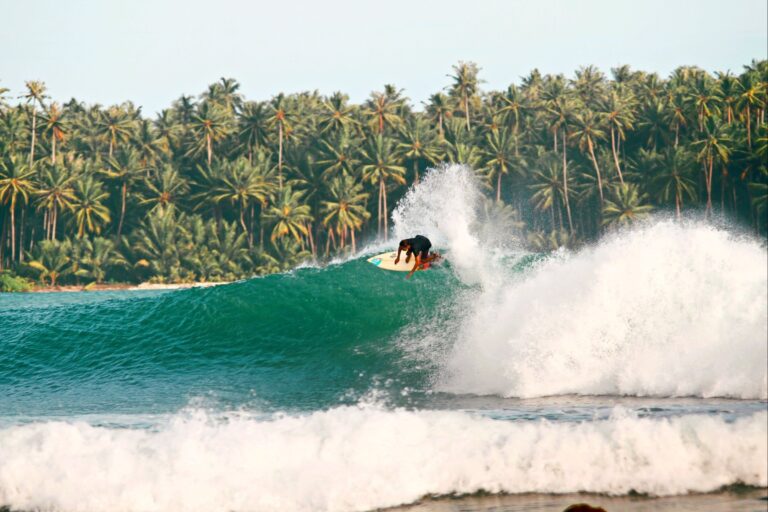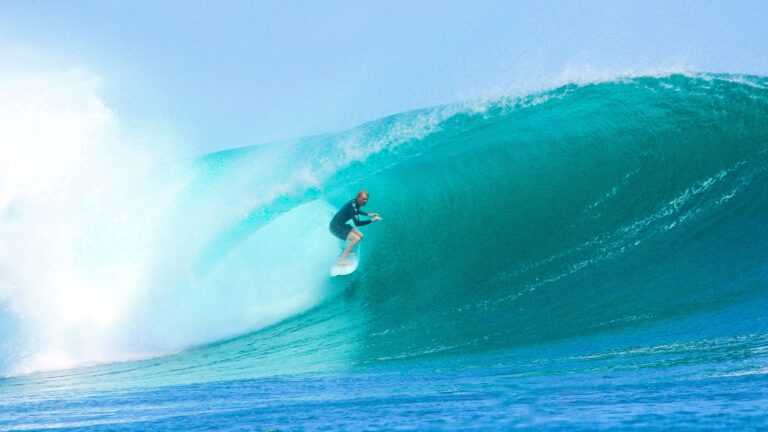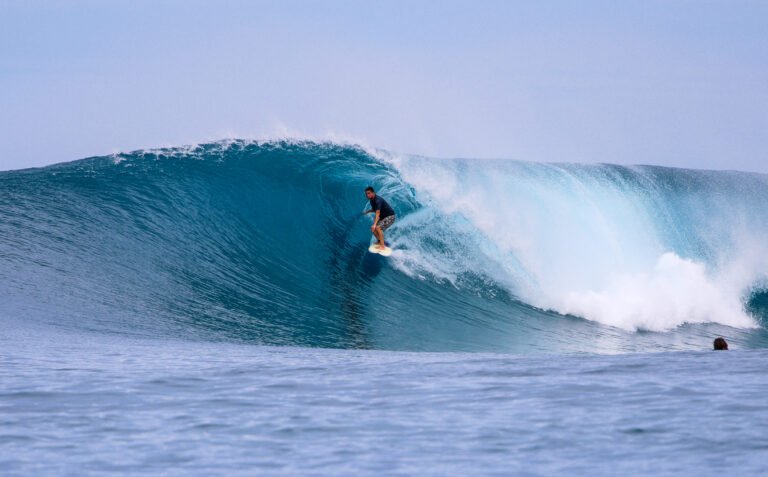
Most people fly straight over Java on their way to Bali. Their loss. A few hours south of Jakarta, the coast of West Java is lined with cobblestone points, reef breaks and long, mellow rights, surfed by one of the most passionate surf communities in Indonesia.
This guide focuses on Cimaja, the heart of the West Java surf scene, plus the best of the rest: the waves around Pelabuhan Ratu and the longboard paradise of Batukaras.
Photos: Rahcat (@water_lens)
In This Guide
The Short Version
- Cimaja: a right-hand cobblestone point near Pelabuhan Ratu. Best for intermediate surfers and up, but fine for beginners on small days with a local coach.
- Batukaras: a long, mellow right in a sheltered bay. One of the best places in Indonesia to learn and longboard.
- When to go: April to October for the most swell. Surf early, before the wind picks up.
- Getting there: Cimaja is about four to six hours’ drive from Jakarta, depending on traffic. Batukaras is a much longer trip.
- The vibe: Sundanese, local and busy with Jakarta surfers on weekends. Come midweek if you can.
Cimaja
Cimaja is a small village just west of Pelabuhan Ratu, in Sukabumi regency. It’s where a lot of Indonesian surfers first fell in love with the sport, and it’s still the go-to weekend escape for surfers from Jakarta.
The Wave
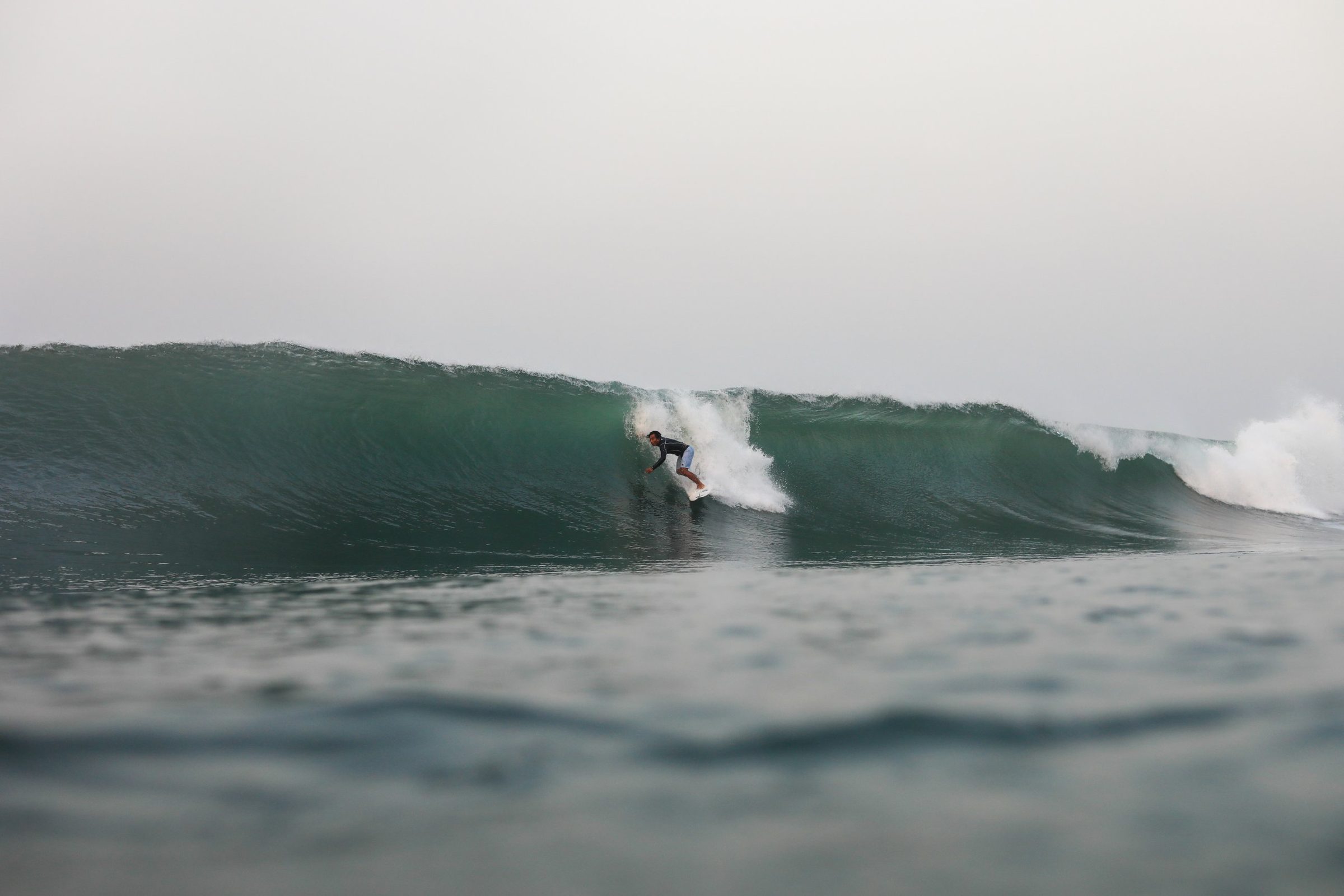
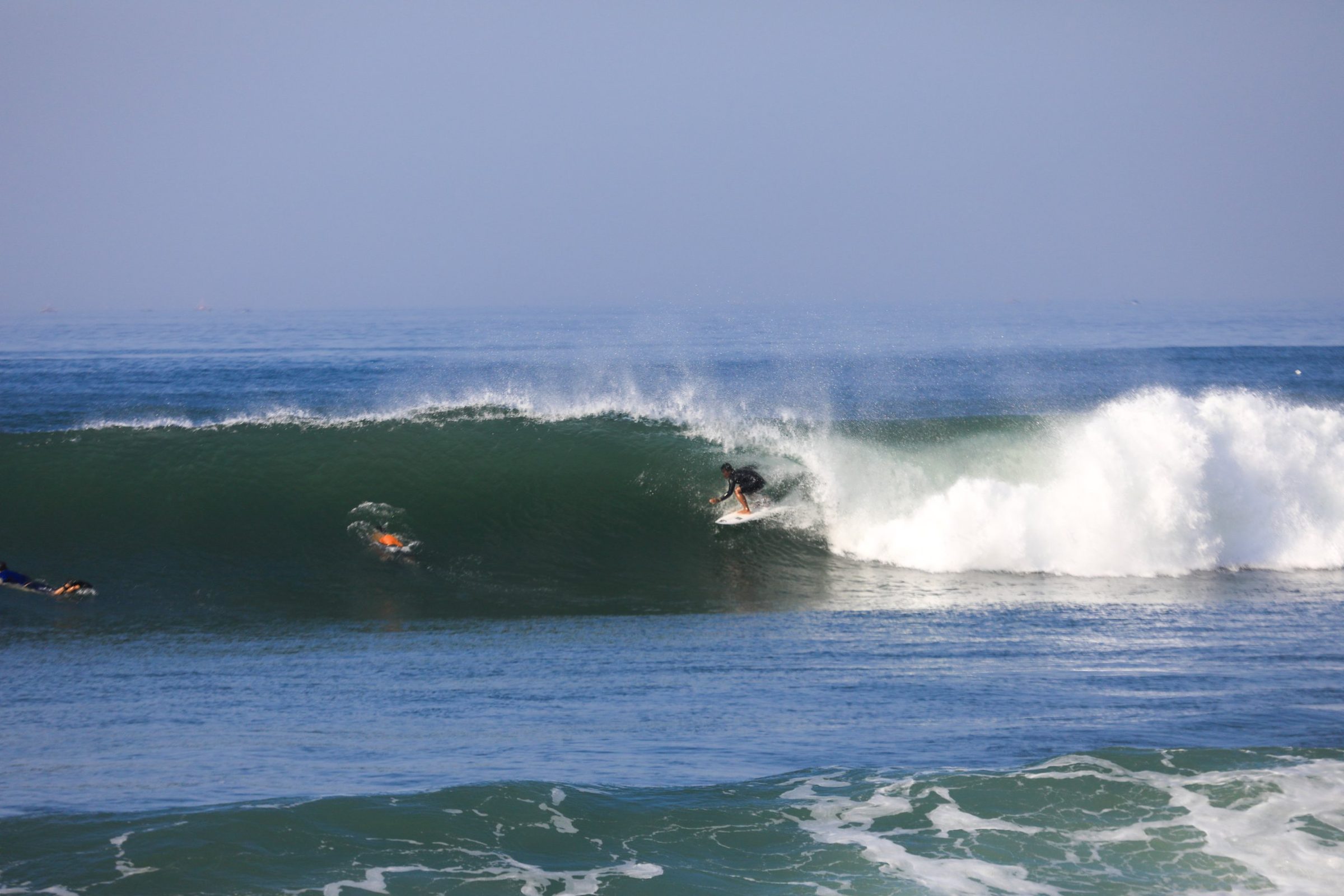
Cimaja Point is a right-hander breaking over a bottom of rounded boulders and cobblestones. On a good southwest swell, it peels down the point with walls to carve and the odd hollow section. It’s consistent, holds a decent size and gets fun from about shoulder high.
- Tide: it works on most tides, but mid to high is usually the friendliest.
- Wind: light northeast winds are offshore, and mornings are usually the cleanest, so get in early.
- Watch out for: the rocks at the take-off and on the way in and out. Pick your entry and exit carefully.
- After rain: the water near the river mouths can get dirty. Give it a day if you can.
Who It’s For
The point is best for intermediate surfers and up. It’s punchy, the take-off is competitive and the rocks don’t forgive mistakes. That said, on small, clean days beginners can have a great time here with a local coach who knows the line-up. If you’re just starting out, book a lesson and let your coach decide when and where you paddle out.
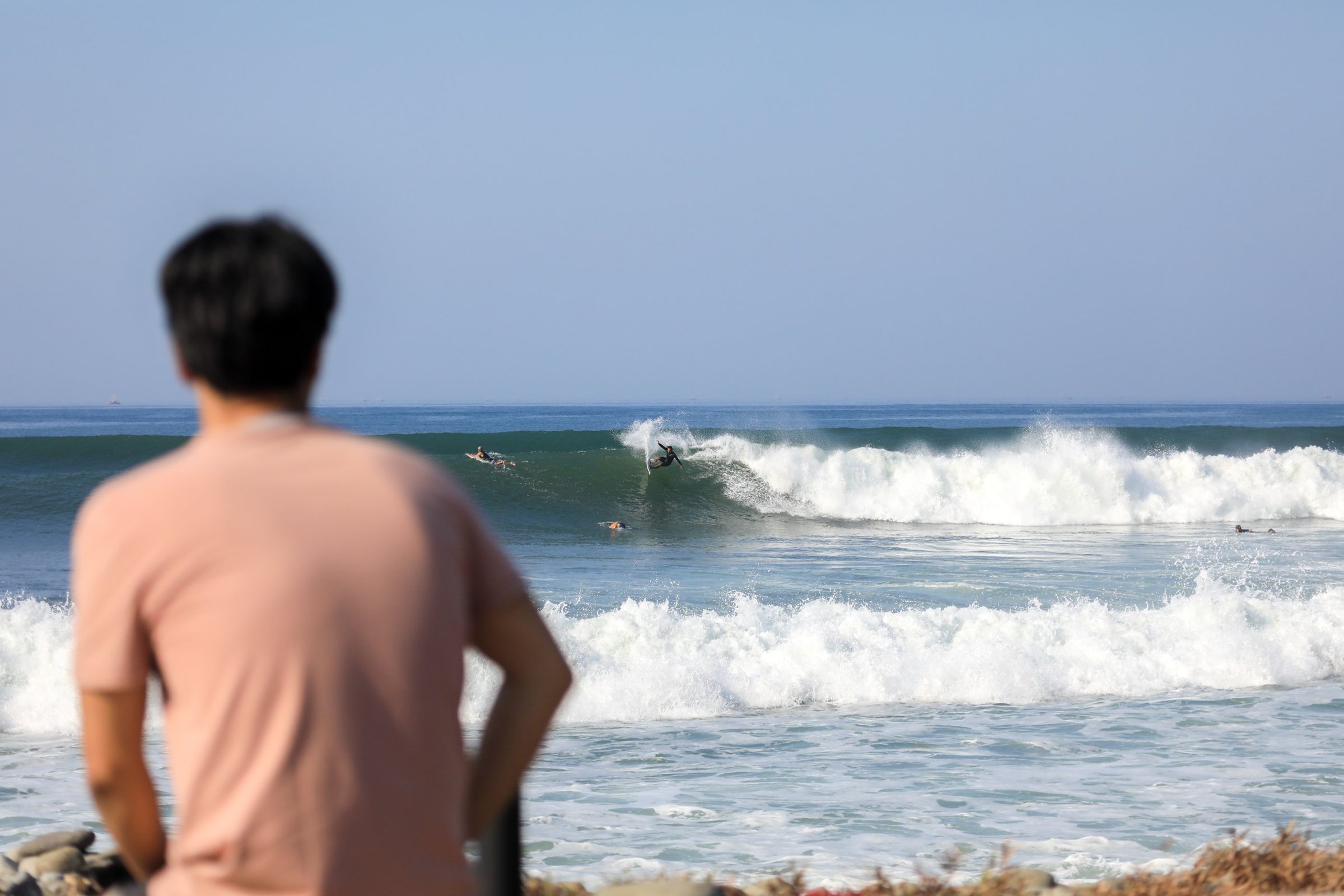
Cimaja gets busy on weekends and public holidays, when half of Jakarta seems to arrive at once. Be patient, don’t drop in and say hello to the locals. Our surf etiquette guide covers the basics.
More Waves Around Pelabuhan Ratu
Cimaja sits in the middle of a long stretch of surfable coast. A few of the best-known waves nearby:
- Karang Haji: a mellower right-hand reef a few kilometres west of Cimaja, near Cisolok. A good option for longboarders and progressing surfers.
- Karang Hawu: also known as Sunset Beach. A beach break with rights and lefts, a surf school and a popular place for lessons. Watch out for strong currents.
- Loji: a long left-hand point east of Pelabuhan Ratu that comes alive on a solid swell. Rocky and remote, so it’s for experienced surfers.
- Ujung Genteng: a few hours further south, home to Ombak Tujuh, a powerful big-wave reef for very experienced surfers only.
A word of warning about the beaches around Pelabuhan Ratu: the open beach breaks can have strong rips and heavy shore break. If you’re not a confident surfer or swimmer, stick to the spots your coach recommends.
Batukaras
Far to the east, near Pangandaran, Batukaras is a quiet fishing village with one of the friendliest waves in Indonesia. A long, slow right wraps around the headland into a sheltered, sandy bay. Beginners learn on the inside, while longboarders trim the whole point on bigger days.
It’s a lovely, laid-back place to spend a week, with local surf schools, homestays and warungs along the beach. It’s also a long way from Jakarta, so give yourself a few days to make the journey worth it.
When to Go
- April to October: the dry season brings the most consistent swell. Surf early, when the wind is usually lightest.
- November to March: the wet season brings smaller, less consistent surf and more rain, but also fewer people. Batukaras still has waves for learning most of the year.
For the bigger picture, see our guide to the best time to surf Indonesia.
Getting There
- To Cimaja: drive from Jakarta via Bogor and Sukabumi to Pelabuhan Ratu, then head west to Cimaja. Plan on four to six hours, and much more on Friday nights and holiday weekends. Many homestays can arrange a driver.
- By bus: buses run from Jakarta to Pelabuhan Ratu, then local transport to Cimaja. It’s cheap and slow, and not ideal with boards.
- To Batukaras: it’s a long trip from Jakarta by road, or you can take the train to Banjar and continue by bus or car. Small flights to Nusawiru, near Batukaras, run on some days, but check your board allowance before you book.
Flying into Jakarta with boards? Read flying with surfboards in Indonesia first.
Where to Stay
Around Cimaja you’ll find everything from simple homestays a short walk from the point to hotels along the coast towards Pelabuhan Ratu. In Batukaras, most surfers stay in homestays and small guesthouses near the beach. Many are family-run, and staying with them keeps your money in the community. See our places to stay in West Java.
Life on the West Java Coast
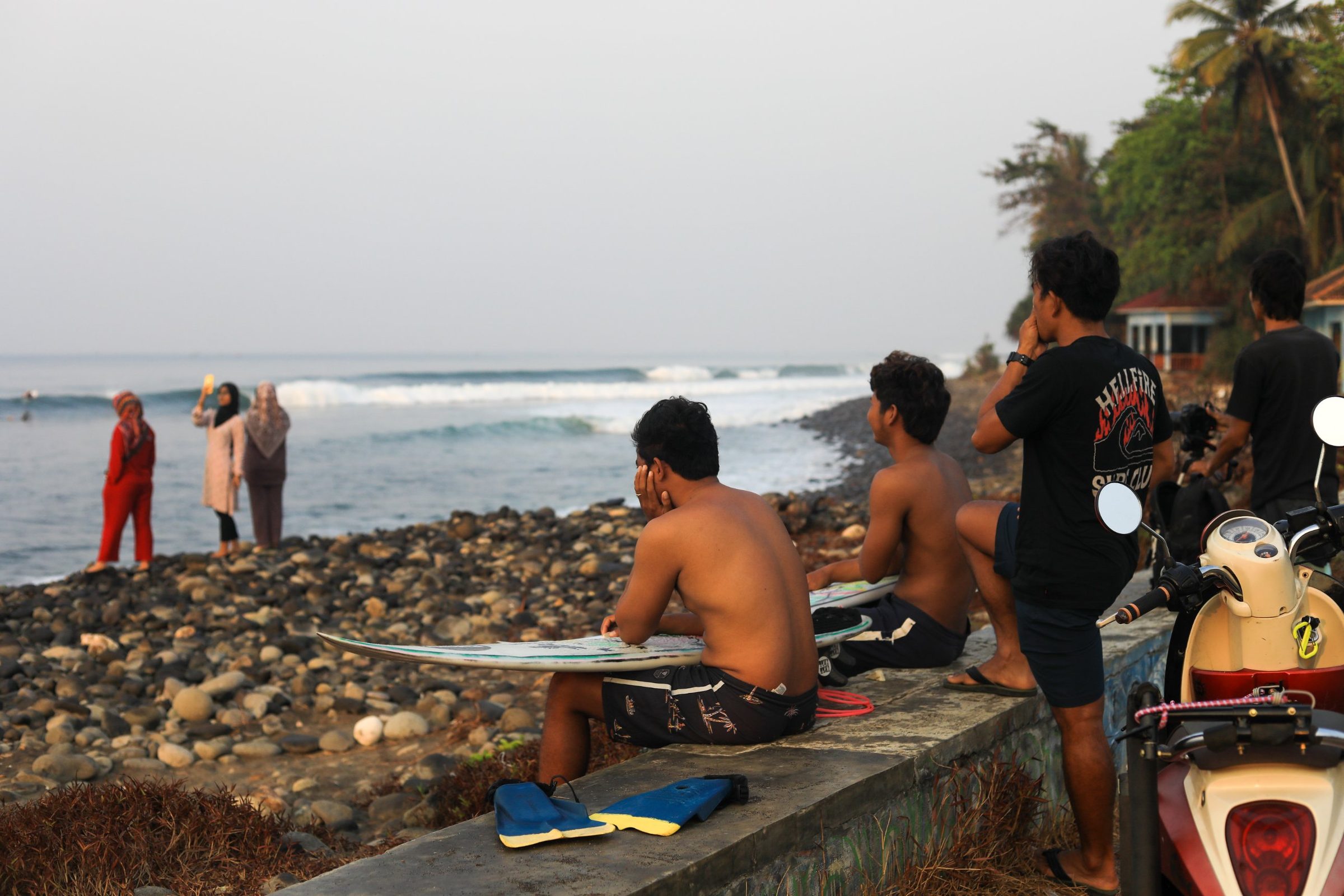
- It’s Sundanese country, and mostly Muslim. Cover up when you leave the beach, especially around mosques and during Friday prayers.
- Bring cash. There are ATMs in Pelabuhan Ratu and Pangandaran, but cards aren’t widely accepted in the villages.
- Eat local. Grilled fish from the Pelabuhan Ratu market, nasi timbel and fresh coconuts.
The Queen of the Southern Sea
You can’t spend time on this coast without hearing about Nyi Roro Kidul. In Sundanese and Javanese folklore, she’s the Queen of the Southern Sea, ruler of the Indian Ocean off Java’s south coast. Pelabuhan Ratu even takes its name from her: it means “Port of the Queen”.
Sea green is said to be her colour, and the old belief is that wearing green on the southern coast brings misfortune. Some say the Queen calls people dressed in green into the sea. Many locals still avoid it, especially on the beach and in the water.
The legend is still very much alive. Pelabuhan Ratu holds a celebration in her honour every year, and at the Grand Inna Samudra Beach Hotel, built in the 1960s at the request of President Soekarno, Room 308 is decorated in green and kept for the Queen.
You don’t have to believe the story to respect it. Leave the green boardies and bikinis at home, and when locals tell you the sea is angry or not to swim somewhere, listen. This coast has strong currents, and the legend has kept a lot of people careful.
Planning a bigger trip? Our complete guide to surfing in Indonesia covers every region, the seasons and which waves suit your level.
FAQs
Is Cimaja good for beginners?
The point is best for intermediate surfers and up, as it breaks over rocks and can get punchy and crowded. On small, clean days, beginners can surf here with a local coach. Batukaras is the better place to learn in West Java.
How far is Cimaja from Jakarta?
About four to six hours by car, depending on traffic. The drive goes via Bogor and Sukabumi to Pelabuhan Ratu, and Cimaja is a short drive west from there. Friday nights and holiday weekends can take much longer.
When is the best time to surf Cimaja?
April to October brings the most consistent swell. Surf early in the morning, before the trade winds pick up.
Is Batukaras good for learning to surf?
Yes. Batukaras has a long, slow right in a sheltered bay, with a gentle inside section for beginners. It’s also one of the best longboard waves in Indonesia.
Where is the best surf in West Java?
Cimaja is the best-known wave and the easiest to reach from Jakarta. Batukaras is best for learning and longboarding, and experienced surfers can explore heavier waves like Loji and Ombak Tujuh.