
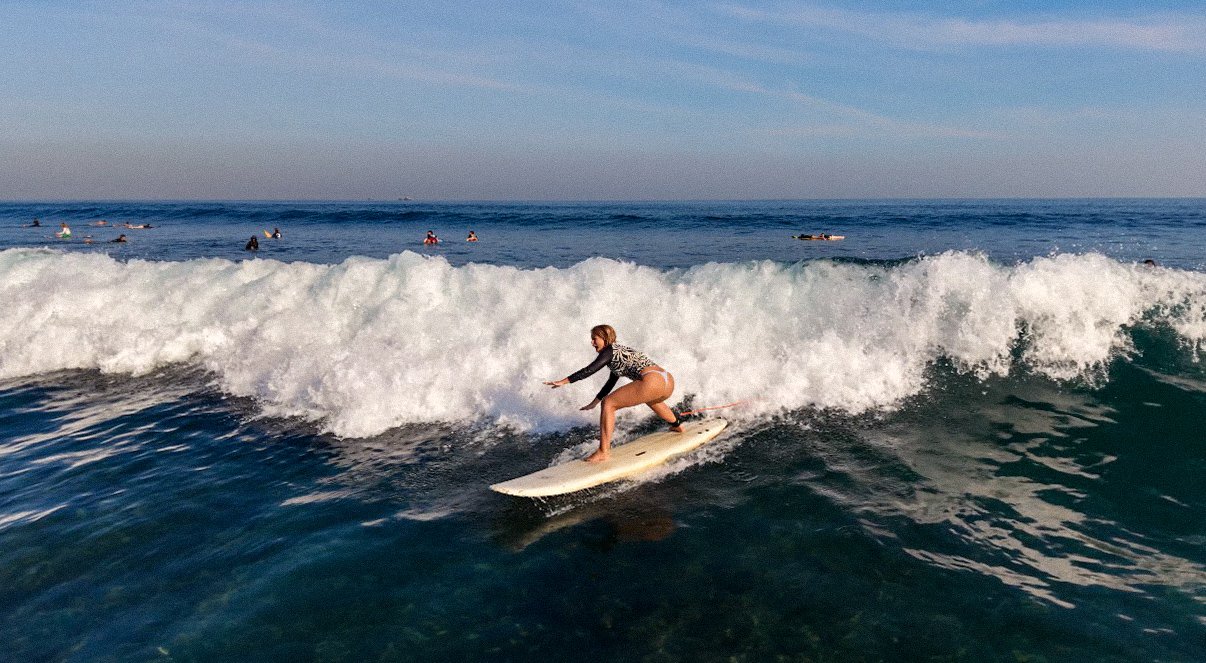
Bali has a reputation for powerful waves, and rightly so. This is an island of shallow reefs, powerful swells, and surf spots that have been drawing some of the world’s best surfers for decades.
But you do not need years of experience to surf here.
Scattered around the island are waves that give beginners a little more room to figure things out. Some have sandy bottoms and easy whitewater. Others are better once you have learned to paddle into your own waves and are ready to start surfing along the face.
The important thing is knowing where to go and when.
A surf spot that feels mellow at waist-high can become a completely different wave when a solid swell arrives. Tides, wind, swell direction, and crowd levels all matter. So while these are some of the most beginner-friendly surf spots in Bali, always check the conditions before paddling out and, if you are still learning, go with a local surf instructor or someone who knows the break.
Here are five good places to start.
Table of Contents
1. Kuta Beach
There is a reason so many surfers caught their first wave at Kuta.
Long before Bali became home to surf villas, beach clubs, and an ever-growing number of trendy neighborhoods, Kuta Beach was already one of the centers of the island’s surf scene. Today, it remains one of the easiest places in Bali to get on a board for the first time.
Unlike many of Bali’s famous reef breaks, Kuta is a beach break. The waves break over sand, and there are numerous peaks spread along the beach. On smaller days, beginners can stay in the whitewater and practice the basics: paddling, popping up, finding balance, and getting comfortable with the ocean’s motion.
Once you start progressing, you can paddle farther out and try catching unbroken waves.
Kuta is also convenient. Surf schools and board rentals are easy to find, so you do not need to arrive with much more than a pair of boardshorts or a swimsuit and a willingness to fall off a lot.
And you will fall off a lot. That is part of it.
The main thing to watch in Kuta is the current. It may look like a straightforward sandy beach, but rips can form, and the conditions can change quickly, particularly when the swell gets bigger. If you are new to surfing, stay close to a surf school or lifeguarded area and learn how to identify the currents before heading out alone.
Best For: First-time surfers and beginners practicing in the whitewater.
Wave Type: Beach Break
Good to Know: Conditions can become powerful when the swell increases, and currents are common.
2. Jimbaran Beach
Jimbaran is not the first place most people think of when they talk about surfing in Bali. That is partly what makes it useful.
The bay is more sheltered than many of the island’s open-ocean surf spots. On smaller days, it can be almost completely flat. But when enough swell wraps into the bay, Jimbaran can produce soft waves and rolling whitewater that work well for beginners.
It can be especially useful when other beaches around the Bukit and the west coast are too big.
The sandy bottom removes one of the biggest concerns many new surfers have about learning in Bali: falling onto a shallow reef. There is also plenty of space along the bay, although the quality and size of the waves can vary considerably from one part of the beach to another.
Jimbaran is a spot where timing matters. You may arrive one day and find playful beginner waves, then return another morning to a nearly flat ocean.
But when the swell lines up, it can be one of the more forgiving places to learn in South Bali.
Best for: First-timers and beginners when other nearby spots are too big.
Wave type: Beach Break
Good to know: Jimbaran needs enough swell to start working, so it is not consistently surfable every day.
3. Thomas Beach
The Bukit Peninsula is better known for waves like Uluwatu, Padang Padang, and Bingin… Names that tend to get experienced surfers excited and beginners into trouble.
Thomas Beach offers a gentler introduction to surfing in this part of Bali.
Located between Padang Padang and Uluwatu, Thomas can offer fun, manageable waves when the swell is smaller and the tide is right.
For beginners who have already spent some time in the whitewater, Thomas can be a good place to start learning how to catch green waves and surf along the face rather than riding straight toward the beach.
The keywords here are on the right day.
Thomas is still exposed to the same Indian Ocean swell that lights up the rest of the Bukit. When the swell builds, it is no longer a beginner wave. The reef bottom also means it deserves more respect than a sandy beach break.
Check the conditions before you paddle out. If you are unsure, ask one of the local surfers or surf instructors on the beach.
Best for: Beginners starting to catch unbroken waves.
Wave type: Reef Break
Good to know: Best for beginners on smaller, friendlier days. Bigger swells can quickly change the character of the wave.
4. Baby Reef, Sanur
Like Thomas Beach, Baby Reef is where many surfers begin their transition from riding whitewater to actually surfing waves.
Located offshore from Sanur, the wave is generally reached by boat. That alone makes the session feel different from walking into the water from the beach. You load the boards, motor out across the lagoon, and paddle into the lineup with Bali’s east coast behind you.
Compared with many of the island’s better-known reef breaks, Baby Reef can be relatively mellow when the conditions are right. The wave often gives progressing beginners enough time to get to their feet, find a line, and begin understanding what it means to surf across the face of a wave.
But the name can be misleading.
Baby Reef is still a reef break. It is not automatically safe or suitable for every beginner, and conditions change with the swell, tide, and wind. It is better suited to surfers who can already paddle, pop up consistently, and control their boards.
Sanur also tends to come into its own during Bali’s wet season, when winds can favor the east coast while the west coast becomes more exposed to onshore conditions.
If you are surfing Baby Reef for the first time, it’s a good idea to go with a local guide or instructor. They will know the tide, the conditions, and where to sit.
Best for: Progressing beginners learning to surf green waves.
Wave type: Reef Break
Good to know: Usually accessed by boat and best surfed with local knowledge, especially if it is your first time there.
5. Medewi
Medewi is a different kind of Bali surf experience.
Several hours northwest of the busy surf towns of South Bali, the coastline opens up, and the pace begins to slow. Medewi’s main wave is a long left-hander that can offer some of the longest rides on the island.
For a progressing beginner, that length is valuable.
A short wave may give you only a few seconds to stand up and figure out what to do next. At Medewi, a good wave can give you time to settle into your stance, look down the line, practice your turns, and start understanding how to stay with a wave rather than simply riding it toward shore.
The wave is often described as mellow, but that does not mean Medewi is ideal for someone who has never surfed before. The rocky entry and exit can be awkward, and you need enough board control to navigate the lineup safely.
For complete beginners, the nearby beachbreaks may be a better place to start. The main point is better suited to surfers who already know how to paddle into green waves and want more time on their feet.
Medewi is also a popular wave, and the lineup can get busy. A long, mellow wave still requires good surf etiquette.
Know who has priority, do not drop in, and take the time to watch how the lineup works before paddling straight to the peak.
Best for: Progressing beginners and early intermediates.
Wave type: Left-Hand Point Break
Good to know: The wave can be mellow, but the rocky access and busy lineup make it not as suitable for a complete first-timer.
Which Bali Surf Spot Is Best for Your Level?
If you have never surfed before, Kuta Beach is probably the easiest place on this list to start. The sandy bottom, easy access, and number of surf schools make the whole process simple.
Jimbaran Beach can also be a good option when there is enough swell in the bay, particularly when more exposed surf spots are too big.
Once you can paddle, pop up consistently, and catch waves without someone pushing you, Thomas Beach and Baby Reef can help you transition from whitewater to surfing along the face of a wave.
And when you are ready to spend more time actually riding, Medewi offers the kind of long wall that gives you space to practice.
There is no single best beginner surf spot in Bali every day of the year. The best spot is the one that fits your ability and the conditions that day.
A Few Things to Know Before Surfing in Bali
Check the conditions, not just the surf spot.
A beginner-friendly wave is only beginner-friendly under the right conditions. Swell size, tide, wind, and currents can completely change a surf spot.
If you are not yet confident reading a surf forecast, ask a local surf school or experienced surfer before heading out.
Learn basic surf etiquette.
Bali’s lineups can be busy. Before paddling into a crowded break, learn the basic rules: who has priority, how to paddle back out without getting in someone’s way, and why dropping in on another surfer is never okay.
Good etiquette keeps the lineup safer and makes surfing better for everyone.
Use the right board.
Learning on a board that is too small will make everything harder than it needs to be. A larger board with plenty of volume will help you paddle, catch waves, and get to your feet more easily.
There is plenty of time for a tiny shortboard later.
Respect local surfers.
These waves are home breaks for Bali’s surfing communities. Be friendly, be patient, and remember that you are a guest in someone else’s lineup.
A little respect goes a long way.
Start With the Right Wave
Learning to surf in Bali can be humbling.
You will miss waves you were sure you would catch. You will stand up too early, too late, or somehow sideways. Some sessions will feel like everything is finally making sense, and the next one may leave you wondering whether you have learned anything at all.
That is surfing.
The trick is not to find the most famous wave. It is to find the wave that gives you the best chance to learn. Start somewhere manageable. Pay attention to the ocean. Take your time. The better waves will still be there when you are ready.